
2020 W Rochelle Rd Irving, TX 75062
Your Guide to Bone Grafting Before Implant Surgery
If you are considering getting dental implants you are already on the road to restoring your smile. Since dental implants are surgically placed and inserted into the jawbone, one of the questions our Irving patients ask is whether or not they will need a bone graft prior to the procedure. We encourage you to visit our dental office for an examination and X-rays so that we can answer this question based on your health. You can schedule an appointment by calling (469) 656-4025. In the meantime, here are some answers to frequently asked questions about the bone graft procedure.
What is Bone Augmentation?
Bone augmentation can be performed multiple ways but the purpose of the procedure is to augment or build bone so that your jawbone becomes denser and stronger.
Why Does the Jawbone Lose Density in the First Place?
This is typically due to resorption. Within the first year of tooth loss you can lose up to 25 percent of your bone density in that particular area. It only continues from there. That is because teeth and roots provide stimulation to the jawbone and that stimulation is a signal to the brain that your jaw is serving its primary purpose. When teeth fall out, that stimulation is reduced or eliminated completely. As a result, the body begins to leach calcium from the jaw for use elsewhere. If you know that you are going to lose a tooth, do not hesitate to schedule an appointment since there are certain procedures that can prevent or limit the amount of resorption.
Other reasons for a loss of bone density is periodontal (gum) disease, developmental defect, injury or decay and infections. Visiting the dentist on a regular basis for preventative care can help to reduce these risks.
When is Bone Grafting Necessary for Dental Implants?
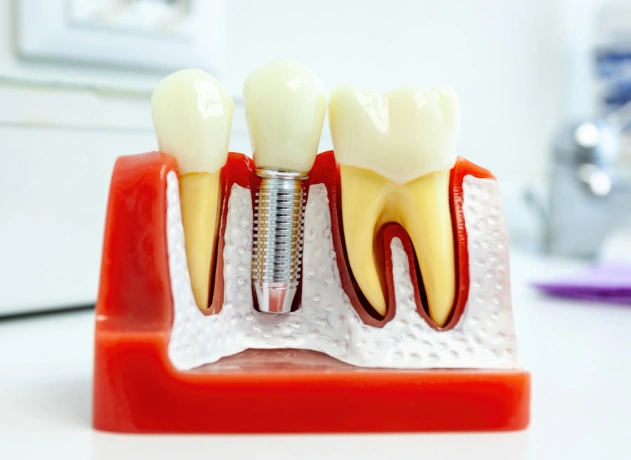
If you have lost bone density, your jawbone may no longer be thick enough for an implant. When replacing your teeth with dental implants, a dentist will be surgically placing a small titanium post under your gums and securing it to your jawbone. As such, your jawbone must be dense enough to support the post. Think of it in the same way as if you were building a piece of furniture. The wood you were using would need to be thick enough for the screw. Otherwise, it would not be able to screw in all the way. A bone grafting procedure can increase the density of your jawbone so that the titanium post is a perfect fit.

Whose Bone is Used for the Actual Graft?
Your own bone can be used or processed bone may be used. Additionally, there are some newer technologies that may not require bone at all but can work to actually transform cells into bone. However, this is new technology and may not work for everyone.
Check out what others are saying about our oral health support services on Yelp: Will I Need a Bone Graft for Dental Implants? Irving.
What Happens Before the Procedure?
Images will need to be taken of your bone so that the dentist and surgeon can create a plan for how to augment it. This is typically done using a CT scan. Additionally, you will need to decide whether you want to use processed bone or have bone taken from somewhere else in your body.
What is the Bone Grafting Procedure Like?
Most likely you will be put to sleep for this procedure. No matter what, the area will be numbed with anesthesia. This applies to your gums and to any area from which bone is being removed. Next, an incision will be made in your gum tissue and a flap created so that your bone is visible. This allows the surgeon to identify exactly how much bone needs to be placed there. If bone is being taken from somewhere else, an incision will be made so that the bone can be extracted at this time. Grafting material will be placed where the bone once was and that area will be stitched up. Next, the new bone will be anchored to your jawbone using a titanium screw. Other grafting material may be used to surround that new block of bone. Some surgeons may also place membrane material around the bone graft. Afterward, the area will be closed and sutured.
What is the Recovery Time and How Will I Feel Afterwards?
Immediately following your bone grafting procedure you will be very sore. To combat this, you will want to take ibuprofen and use ice packs for fifteen minutes at a time. You will also be given antibiotics to take and want to use an antibacterial mouthwash to prevent an infection. It is essential that you keep pressure off of the area and are careful with what you eat for several weeks.
For the process to be complete it takes several months, usually six to nine. This is because your body will either be building new bone around the grafting material or fusing your jawbone with the bone that was added from somewhere else in your body. Naturally this is a slower process but once complete, your dental implants can be placed and they should be far more secure as a result.
Is This a Common Dental Procedure?
This is a highly specialized procedure that is only performed by certain dentists. This is why you may visit one dentist for a bone grafting procedure and another for dental implants.
Are There Alternative Options?
Yes. Some dentists offer mini dental implants. These implants are not for everyone. However, they can work well if you have limited density in your jawbone but are not interested in having a bone grafting procedure. These implants are shorter and wider, making them an alternative for those suffering from resorption.
Schedule an Appointment
The best way to find out if you need a bone grafting procedure is to call (469) 656-4025 and schedule an appointment with our dental office. At Dental Artistry, we can take X-rays and let you know if your bone is lacking in density. We can then make a recommendation for treatment and let you know if you need to see a specialist.



Frequently Asked Questions
Enhancing the Way You Smile
Looking for dental help? Our dental team is always ready to help you achieve the smile of your dreams.